
Manual lymphatic drainage works differently from conventional massage. Discover why MLD uses gentle, rhythmic touch, what de-puffing really means, and where wellness lymphatic drainage ends and clinical lymphoedema care begins.
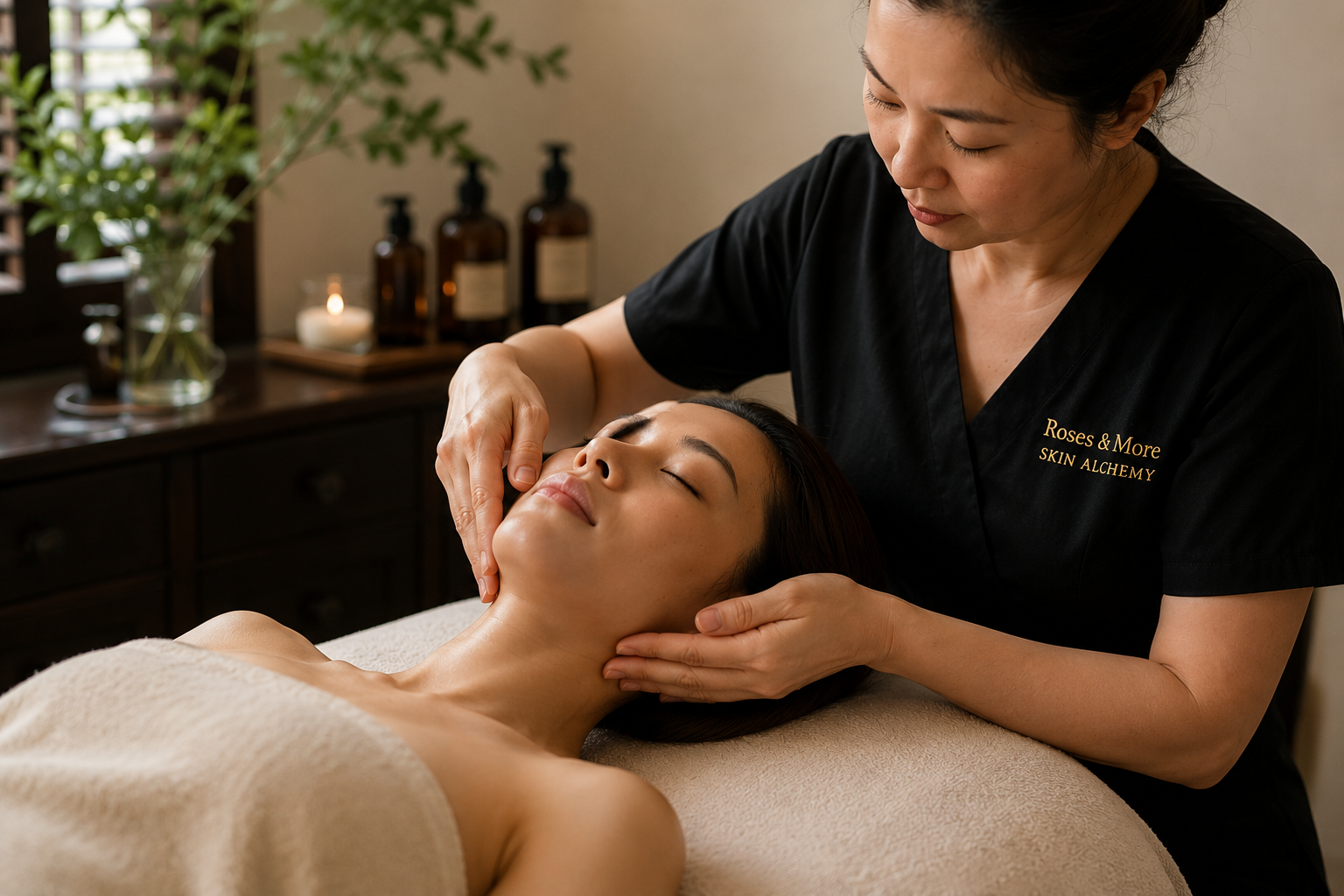
Manual lymphatic drainage works differently from conventional massage. Its touch is deliberately gentle, its purpose is different, and judging it by pressure alone misses what the technique is actually trying to do.
More Pressure Does Not Mean More Drainage
There is a moment during manual lymphatic drainage when some first-time clients wonder whether anything is happening.
The touch is light.
There is no deep kneading. No digging into muscle. No sense that the therapist is trying to overpower the tissue.
For anyone accustomed to judging massage by pressure, it can feel almost counterintuitive.
But manual lymphatic drainage — usually shortened to MLD — is not trying to do the same job as deep-tissue massage.
And that changes everything.
Pressure is only useful when it matches what you are trying to influence. More pressure is not automatically more treatment.
We have been taught to associate effective bodywork with intensity.
A tight shoulder gets pressed harder. A knot gets worked more deeply. If we can really feel the therapist working, we assume more must be happening.
MLD works from a different premise.
It is a specialised manual technique characterised by gentle, rhythmic and directional movements intended to support lymphatic movement.
If the objective is muscular work, deeper pressure may have a legitimate place.
If the objective is lymphatic drainage, the technique is deliberately different.
Manual Lymphatic Drainage Is Not Ordinary Massage
The two are sometimes grouped together because both involve hands working on the body.
Beyond that, the purpose can be quite different.
Conventional massage may be directed toward muscular tension, relaxation or other forms of soft-tissue work.
MLD uses characteristically light, directional and rhythmic movements rather than deep muscular pressure.
Neither approach needs to be declared superior.
They are simply not interchangeable.
If you arrive wanting your shoulders worked deeply after a long week at a desk, MLD may not be the treatment you are imagining. If what you are noticing is puffiness, fluid heaviness or facial fullness, greater pressure does not automatically make more sense.
So What Is the Lymphatic System Doing?
The lymphatic system forms part of the body’s fluid-balance and immune systems.
Fluid continuously moves between the bloodstream and the surrounding tissues. The lymphatic network helps collect part of that interstitial fluid and return it toward the circulation, while lymph nodes also play important roles in immune function.
The lymphatic system does not have one central pump equivalent to the heart. Lymph movement is supported by several mechanisms within the body, including movement, breathing and activity within the lymphatic vessels themselves.
MLD is a manual technique intended to influence lymph movement.
That does not mean a healthy person’s lymphatic system has somehow stopped functioning and needs a therapist to restart it.
And it certainly does not require us to tell you that we are “flushing toxins” from a body incapable of doing that for itself.
Those are claims we do not need.
What We Mean by De-Puffing
At Roses & More, we work with MLD primarily in a wellness context.
That distinction matters.
Someone may notice that their face looks fuller than usual in the morning. The jawline may appear less defined. The body may simply feel heavier or puffier at certain times.
Those are experiences clients can describe without us turning them into a medical diagnosis.
Our role is not to tell every puffy client that something is wrong with their lymphatic system.
It is to decide whether gentle manual drainage appears appropriate within the treatment we are providing.
De-puffing is not fat loss. Fluid movement and loss of adipose tissue are not the same thing.
A temporarily more defined face or less puffy-looking area should therefore not be marketed as evidence that fat has somehow been “drained away”.
It hasn’t.
That distinction may be less spectacular than some of the claims made for lymphatic massage online.
It is also much more useful.
Where Medical Lymphoedema Begins, Our Role Ends
There is another distinction we take seriously.
Wellness MLD is not the same thing as clinical management of lymphoedema.
Clinical lymphoedema care can involve specialist assessment and a broader programme of management. Manual lymphatic drainage may form one component alongside measures such as compression, movement, exercise, skin care and other specialised interventions.
Singapore has appropriately trained healthcare professionals and specialist services for this work.
That clinical territory belongs with them.
Unexplained or persistent swelling, diagnosed lymphoedema, significant post-surgical swelling or medically complex lymphatic problems should not simply be relabelled as a beauty or wellness concern.
Sometimes good care means knowing that the correct treatment is somewhere else.
Why MLD Fits Skin Sequencing™
This is where manual lymphatic drainage becomes particularly interesting to us.
Skin Sequencing™ is not built around doing as much as possible in one appointment.
It is built around deciding what should happen first.
Sometimes we look at a face and the most obvious starting point is not another active, another device or another stimulus.
There may be visible puffiness or fullness that changes the presentation we are looking at.
In an appropriate client, we may therefore choose drainage before moving to another part of the treatment.
Not because MLD magically makes every subsequent treatment work better.
We do not need to make that claim.
We do it because addressing the presentation of puffiness first can give us a different starting point from which to assess and continue the session.
Read what is there. Decide what deserves attention first. Then decide what — if anything — should follow.
That is sequencing.
For a closer look at how we apply this specifically to the face, read our guide to Lymphatic Drainage Facial Singapore .
Sometimes the Quietest Treatment Is the Right One
There is a broader lesson here that extends well beyond lymphatic drainage.
Modern beauty culture tends to reward things we can feel happening.
- Heat
- Pressure
- Peeling
- Needles
- Energy
- Strong sensation
These things can reassure us that something substantial is being done.
But biology does not award extra points for drama.
The appropriate intervention is the one that matches the objective, the tissue and the person in front of us.
Sometimes that intervention is active.
Sometimes it is restorative.
Sometimes it is almost surprisingly gentle.
Manual lymphatic drainage belongs firmly in that last category.
Its lightness is not an apology for the treatment.
It is part of the technique.
When the Problem Isn’t Muscle
If you are noticing facial puffiness, fluid heaviness or a sense of congestion, deeper pressure is not necessarily the answer. Talk to us about whether gentle manual lymphatic drainage belongs in your treatment sequence.
Explore Facial MLD WhatsApp Us64B Peck Seah Street, Tanjong Pagar, Singapore