
The skin microbiome is part of a living barrier ecosystem. At Roses & More, the goal is not to sterilise healthy skin, but to avoid unnecessary disruption and treat what the skin is actually presenting.
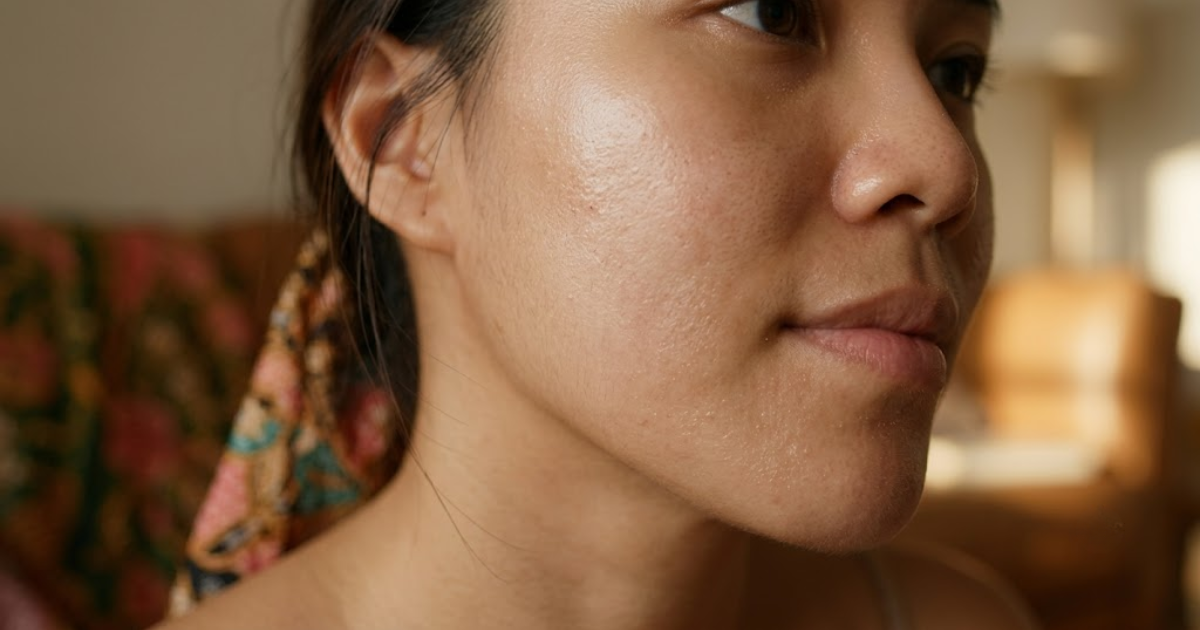
The skin microbiome is part of a living barrier ecosystem. At Roses & More, the goal is not to sterilise healthy skin, but to avoid unnecessary disruption and treat what the skin is actually presenting.
Your Skin Is Supposed to Be Inhabited
Human skin is home to communities of microorganisms — including bacteria, fungi and other microbes — that live alongside the cells and structures that make up the skin barrier.
That is normal.
These microbial communities are not simply contamination sitting on top of the skin. They form part of a wider network involving the physical barrier, the skin’s chemical environment and immune activity.
The composition of those communities also varies from one part of the body to another. Oily areas, dry areas and moist areas do not necessarily support the same microbial populations.
Healthy skin is not sterile skin.
That does not mean every microorganism is beneficial, or that more microbial diversity is automatically better.
It means the skin should be understood as an ecosystem rather than a blank surface that needs to be stripped clean.
The Microbiome Is Part of the Barrier — Not a Separate Trend
The skin barrier is often discussed as though it were only the outer layer of cells and lipids that prevents water loss.
That physical barrier matters enormously, but it is part of a more complex system.
The resident microbiota interact with the physical, chemical and immune components of the skin, and research increasingly describes these systems as closely connected rather than independent.
This is one reason we prefer not to treat “microbiome skincare” as a fashionable category sitting apart from skin barrier care .
Barrier condition, microbial ecology and the wider skin environment influence one another.
The useful question is not simply “How do we add good bacteria?” It is: what is the skin presenting, what may be disrupting its balance, and does anything actually need to be changed?
Why “Good Bacteria Versus Bad Bacteria” Is Too Simple
The language of probiotics has made it tempting to divide the skin microbiome neatly into helpful organisms and harmful ones.
Biology is rarely that tidy.
The behaviour of a microorganism can depend on the strain, the body site, the surrounding microbial community and the condition of the host skin.
Even organisms commonly found on healthy skin can be associated with disease under different circumstances.
So we would not look at a client’s redness, acne or sensitivity and simply declare that the skin has “too many bad bacteria” or needs a probiotic product.
That would replace one oversimplified label with another.
Singapore’s Climate Is Context — Not a Diagnosis
Temperature, humidity, sweat, sebum and moisture all help shape the microenvironment at the skin surface.
That makes Singapore’s tropical climate relevant context.
But humidity is not automatically an enemy of the microbiome, and living in Singapore does not by itself mean someone’s microbial balance is impaired.
What matters clinically is still the person in front of us:
- Skin that has become more reactive after a change in routine
- Frequent cleansing or exfoliation alongside increasing dryness or sensitivity
- Several new products introduced at the same time
- Persistent irritation without a clear explanation
- A treatment routine that keeps escalating without improving tolerance
None of those observations proves that someone’s microbiome is “damaged”.
They are simply reasons to simplify the variables, read the skin again and consider whether the current routine is asking too much.
We Cannot Diagnose Dysbiosis by Looking at Your Face
“Dysbiosis” is increasingly used in skincare marketing to describe almost any skin that is unhappy.
We think that deserves caution.
Changes in microbial communities have been associated with conditions including acne, atopic dermatitis and psoriasis. But that does not mean every breakout, red patch or sensitive episode can be diagnosed as microbiome imbalance from visual inspection alone.
In the treatment room, we can observe the skin’s presentation.
We can ask about routine, history, tolerance and recent changes.
We can make conservative treatment decisions that avoid unnecessary disruption.
What we should not do is use the word “microbiome” to make an uncertain explanation sound medically precise.
The microbiome is real science. That is precisely why it should not become another vague skincare diagnosis.
What This Changes in the Treatment Room
Respecting the microbiome does not require a special microbiome facial.
Often it simply changes the questions we ask.
Do we need another cleansing step?
Does stronger exfoliation have a clear purpose?
Are we adding an antibacterial product because there is a genuine reason for it, or because “bacteria” sounds like something that should automatically be removed?
Does the skin appear comfortable with the current routine?
Would adding another active give us useful benefit — or simply another variable?
Supporting the skin’s ecosystem often begins with restraint: do what has a reason to be done, and avoid disrupting what appears to be working simply because another intervention is available.
What About Probiotic and Microbiome Skincare?
The microbiome skincare category is growing quickly, and research into probiotics, prebiotics, postbiotics and other microbiome-directed approaches is genuinely interesting.
But the existence of promising science does not mean every product labelled “microbiome friendly” or “probiotic” will be appropriate for every person.
Formulation matters.
The condition of the skin matters.
The objective matters.
And, as with any other product category, the ingredient should not lead the treatment decision simply because the marketing language is fashionable.
The Skin Microbiome Through the Skin Sequencing™ Lens
This is where the microbiome fits naturally into our wider Skin Sequencing™ framework.
The microbiome is one part of the skin system we are trying not to ignore.
But it does not become the diagnosis, the objective or the treatment by itself.
We begin with assessment: what the skin is presenting, what the client has noticed, current barrier condition, tolerance, treatment history, homecare and relevant context.
Then we define the objective and consider which mechanisms and inputs — if any — belong next.
Sometimes that means active intervention.
Sometimes it means barrier support.
Sometimes it means removing unnecessary variables and observing what happens.
The microbiome informs that thinking. It does not replace it.
Protect What Is Already Working
Skin care often focuses on what needs to be corrected.
The microbiome is a useful reminder that some of the most important things happening at the skin surface are already there before we touch it.
So our job is not always to add.
Not always to remove.
And certainly not to sterilise.
Sometimes the intelligent treatment decision is simply to understand what is working, disturb it as little as necessary, and intervene only where there is a reason.
Start With the Skin in Front of Us
If your skin has become reactive, unpredictable or difficult to understand, you do not need to diagnose your microbiome first. Tell us what has changed, and we can begin with a live skin read.
Book via Fresha WhatsApp Us64B Peck Seah Street, Tanjong Pagar, Singapore